St Kilda Viewpoint
Isle of North Uist
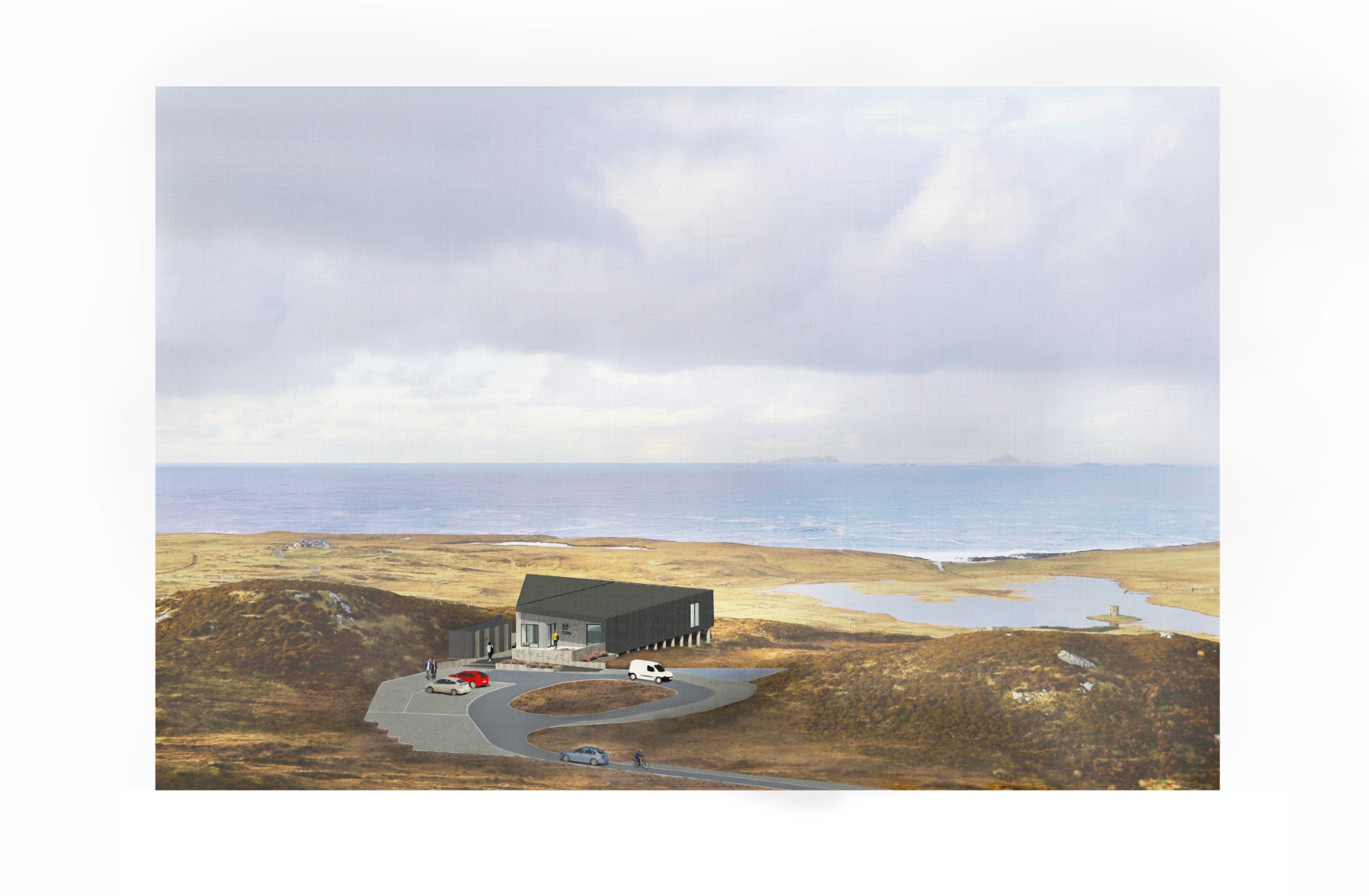
On the slopes of Beinn Riabhach, in the north-west corner of North Uist, the St Kilda Viewpoint will offer a dramatic visitor experience, focusing on the St Kilda archipelago which lies some 40 miles to the west.
Our brief from client group, Sealladh Hiort, was inspiring and challenging: to design a viewpoint building which does justice to St Kilda’s World Heritage Site status, rises to the considerable practical challenges of a remote and very exposed site, responds sensitively to its setting and demonstrates “best value” within a tight budget.
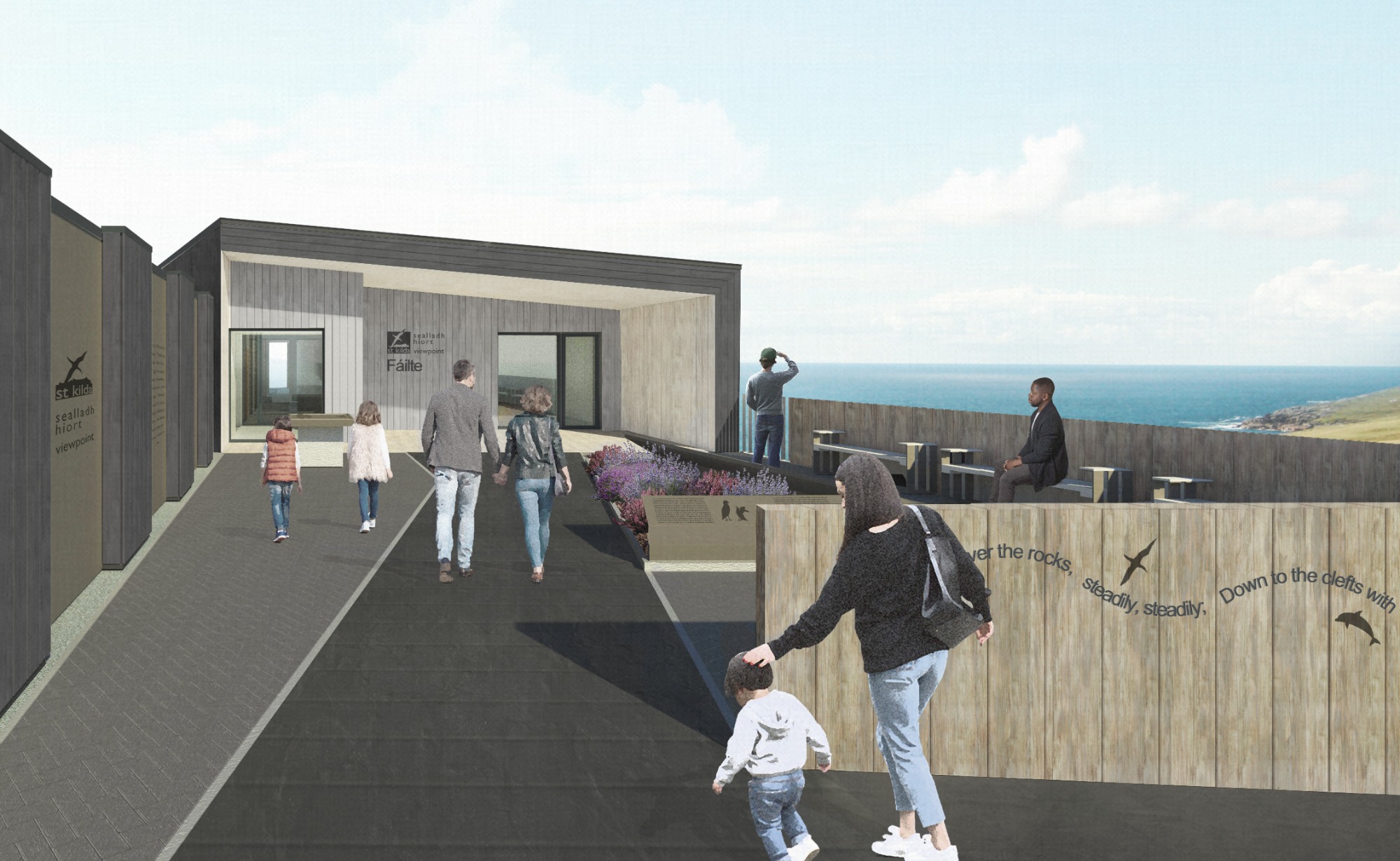
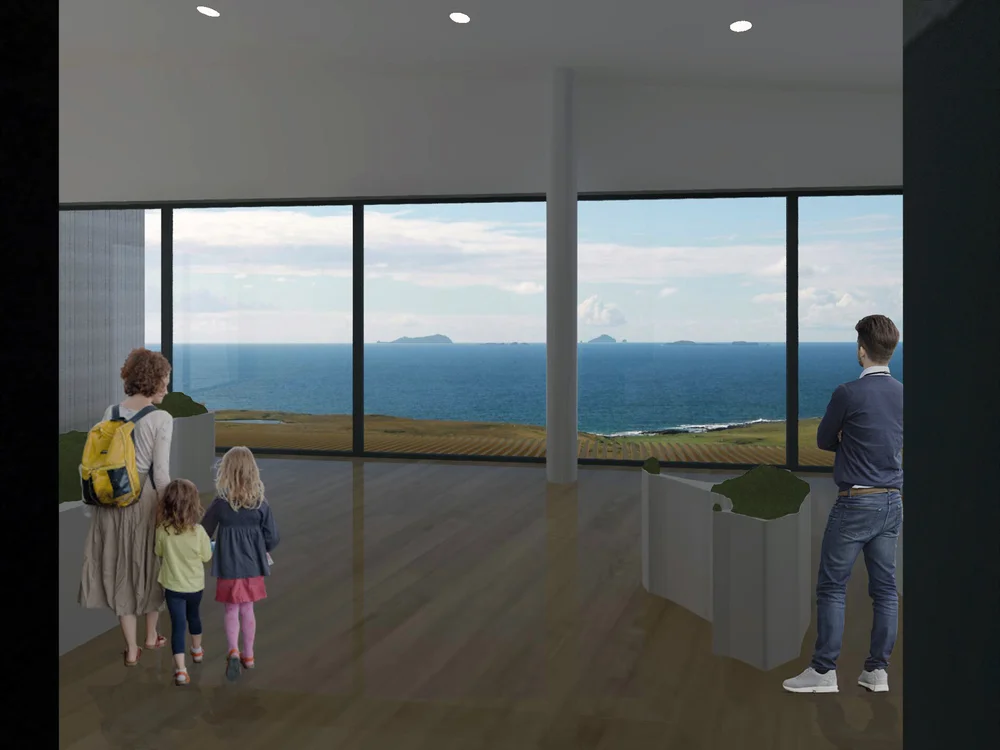
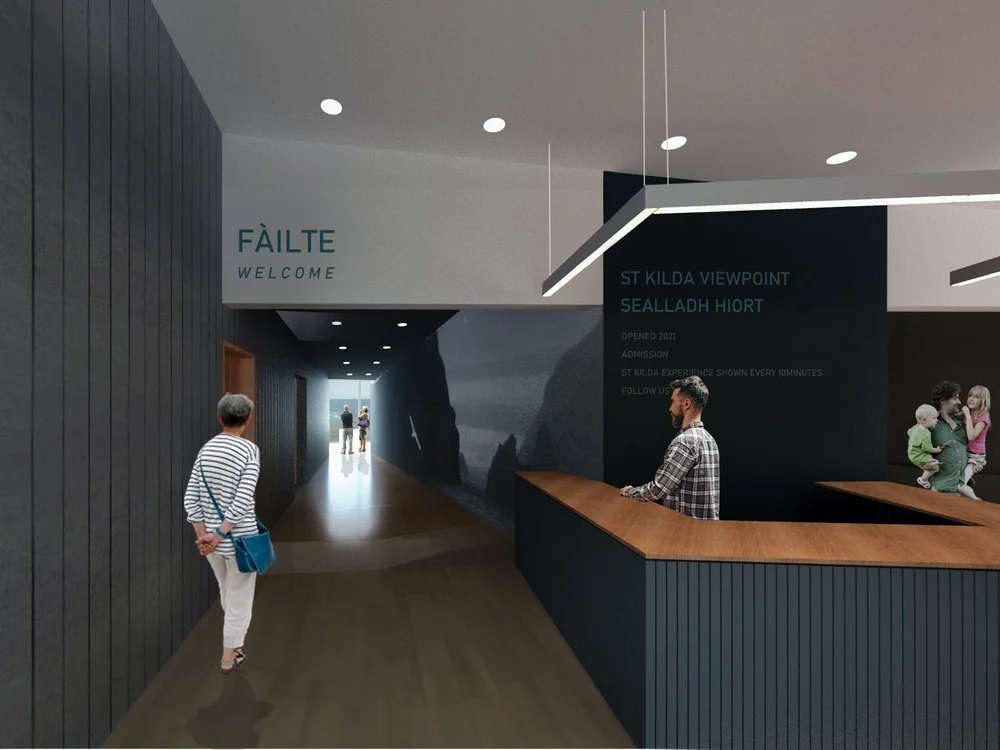
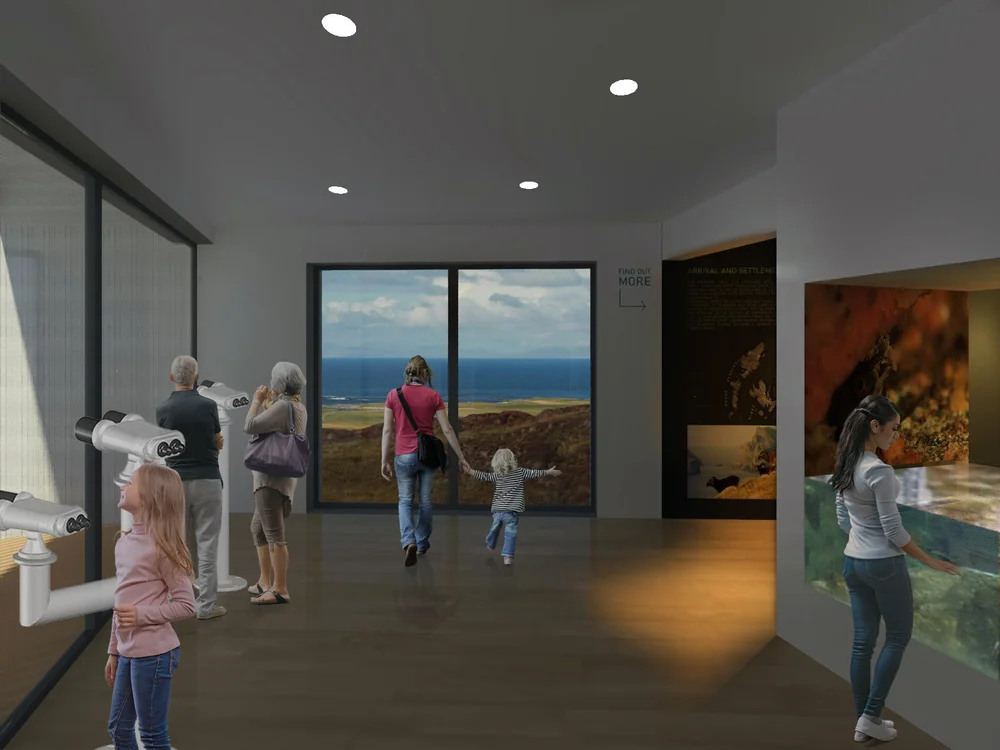
The site offers superlative views of St Kilda and of the numerous less distant islands which were also once inhabited. In response, our design creates a visitor journey which culminates in a panoramic viewing gallery, centred on St Kilda, and taking in a broad sweep from the Monach Isles to the Sound of Harris. A new access road climbs the hillside on a route designed to shield it and the new visitor parking from the gallery view. On arrival, visitors are sheltered from the strong prevailing winds by external walling which defines an area of outdoor interpretation where visitors are drawn into the St Kilda story as they approach on foot. The entrance hints at the view to come but only as the visitor moves through the heart of the building is the panoramic view westward suddenly revealed in full. The gallery is backed by audio-visual and exhibition spaces which create a circulation route back to the entrance and shop.
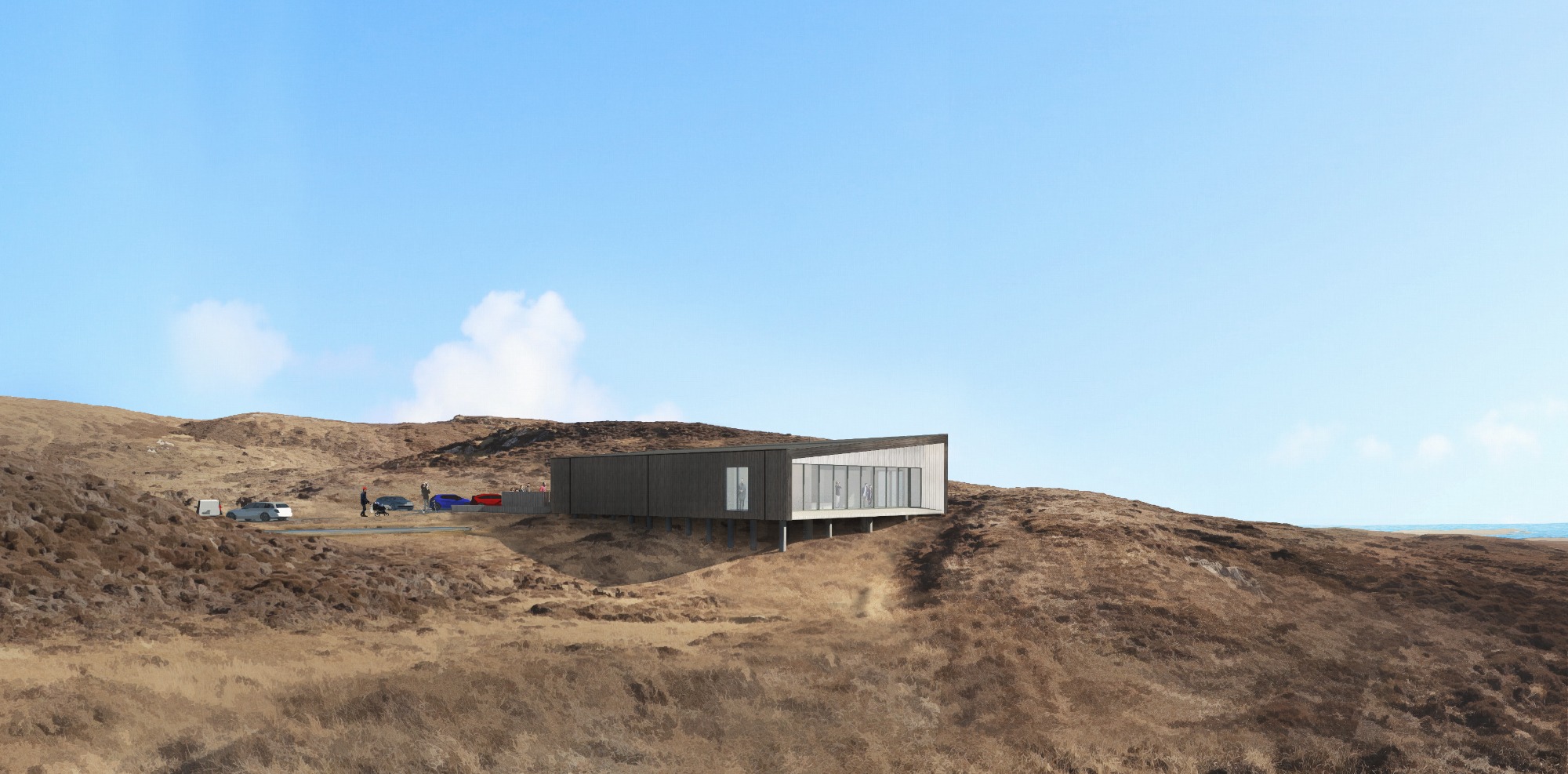
The building has a bold geometry and a restrained palette of materials and colours which harmonise with the heather-clad slopes around it. Although designed to reflect the drama of its focal point from within, the building’s outward form, set in a National Scenic Area, deliberately minimises its visual impact from the public road below and from the summit of Beinn Riabhach.
The physical impact of the building on the landscape will be minimised by use of “light touch” pier foundations. A pre-fabricated timber panel system will allow much of the construction to take place off-site, reducing the challenges of building in such an exposed location.